
Rising from depression and back to back failures
Background:
According to Wikipedia, the Graduate Management Admission Test is a computer adaptive test (CAT) intended to assess analytical writing and problem-solving abilities, while also addressing data sufficiency, logic, and critical reasoning skills that it believes to be vital to real-world business and management success. It can be taken up to five times a year but no more than 8 times total. Attempts must be at least 16 days apart.
MBA has become an important tool for developing key skills in the modern age. It gives a good boost to your personality as well as career. GMAT is an important exam that helps you reach your desired MBA college. It opens the door for you to some of the best b schools in the world. Hence, with this intent, I started my GMAT journey.
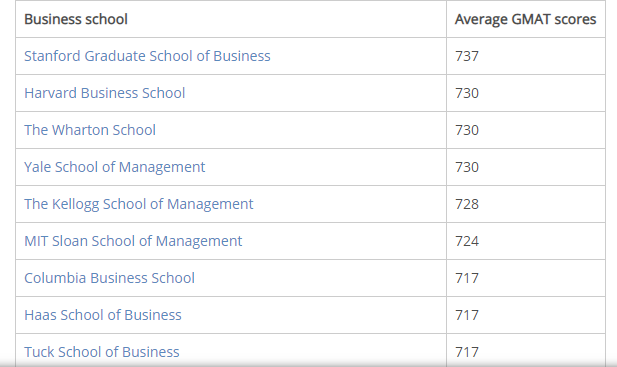
GMAT exam is of total 800 marks. 700 is a magical number for MBA applicants. Globally, the average GMAT score is 565.
A 700 GMAT is the 88th percentile. In other words, just 12% of every test taken — or roughly 1 in every 10 — ultimately yield a score of 700 or above. A 700+ score is desired by many.
My journey:
1st Attempt
For starter, I gave my first GMAT mock with no preperation and scored a 550. I then prepared for GMAT for 6 months. I took up multiple online courses. I realized in early stages that Mathematics was something I was good at just like most other Indians are. But my verbal was not at all good.

Indian English Education is not of Global Standard
Throughout my school life, English was my strongest subject. I always scored 90+ in my exams in English. Even during Indian competitive exams, verbal used to be my strong point.
Not everyone in India has luxury to study in English medium private schools. I was lucky that my parents could afford it for me.

It was until I started prepping up for GMAT, I realised there is a lot more to English than what we are taught. Indians are generally not good with grammar and sentence formation. Being a secondary language, all this is not looked into deep during school time. When you sit in an international exam, then you realize your ‘real’ English level.
After around 6–7 months of preparation, I took up mock tests from a test prep company. I gave back to back 10–12 mocks. All these tests were of a similar pattern. Soon, I became adapted to test the pattern of that company. My average score was 710 in mocks. I was very delighted and excited. I scheduled my GMAT exam. I was expecting a 700 or 690 in the exam but when score flashed on my screen, it was 630.
GMAT costs 250 dollars. That translates to around Rs 18,000. India is an extremely price sensitive market. A lot of Indians don’t go for GMAT because of this thought.
I took courage to put my money into a GMAT exam and I was a failure at the end.
I was in shock!
2nd Attempt
Am I not someone who can give GMAT?
Am I wasting my money?
Am I worthless?
Am I useless?
I read online that people achieve 700+ in 3 months prep at max and I was at 630 after 7 months.

I decided that I would not let these thoughts overpower me and I decided to begin my prep again. I got a feedback report that GMAT gives you, known as ESR report, and realized how imbalanced my score was. My Quant was good. But the verbal score was very imbalanced:
My percentiles in the verbal section:
Reading Comprehension: 90%
Critical Reasoning: 70%
Sentence Correction: 30%
My flaws were evident in my marks. I started working on my SC. Solved a lot and a lot of questions: at least 200. I focused on solving as many questions as I could. I revised all the grammar topics.
I gave GMAT Prep Official mocks once again:
1st mock: 690
2nd mock: 700
I went again to give GMAT, with a hope this time there would be light.
I got 640.
Once again Verbal ditched me.
3rd Attempt
I stopped studying. I decided to give up my dream of an MBA. I would just keep lying on my bed and do nothing. I had wasted thousands of rupees and the result was nowhere close to what I dreamt of.

2 months later, I wanted to give one last try. It was an extremely tough decision. I was contacted by a manager from a test prep company. I sent him both of my ESR reports. He analysed both reports and guided me on the mistakes I did in both tests. He said I did the same mistakes both the times. My pattern of attempting questions was the same.
He informed me, what all I should make my priority. That was the turning point. I got an outside perspective from an expert. And this time I was not going to work only on things that I assumed were wrong with my Prep.
I started working on ONLY official GMAT questions. I practised lots of retired GMAT real exam questions. Well, I can say today, I have worked on almost all official SC and CR questions that are available in the GMAT Club portal. Also, this time it was not just about numbers. I dealt down the mistakes I had done in those questions. I scrutinized my method of problem-solving. I tried understanding my psychology.
I tried changing my pattern of attempting the exam. I bought more official tests. I gave mocks:
GMAT OFFICIAL MOCK 3: 710
GMAT OFFICIAL MOCK 4: 690
Now, it was the day of the final exam. I was very nervous because I was sure: I will not be trying again easily if I fail this time as well.
I just revised all the techniques. While giving the exam also, I made sure that I am not doing those mistakes again that I was doing the last time.
And then in the result flashed:720
Was this real?
I was literally in tears!
The test centre manager looked at me and he was confused “Why is he crying?”. I rushed out to a washroom and sat there for 30 min just to digest the fact. I called my mom after 30 min and told her the good news. She asked out of confusion: “What is GMAT?” I explained her in details. After seeing failures 2 times… Finally, I achieved what I had set out too.
I was tired of failing, this success was something new.

My takeaways
There are a lot of takeaways from this exam. I think working on them can help someone who is stuck on this journey.
1) GMAT is a Psychology Test

GMAT is not just about how well prepared you are. It is also about your frame of mind. There is a huge difference between giving mocks at home and giving the real exam at the test centre. The reason I was scoring high at mocks and bad at real exams was probably that I was very relaxed at home with a frame of mind “Ahh..it’s just a mock.” I was very cautious and tense during the main exam. It led me to make more mistakes.
Try to create a similar test environment at home. Similar breaks pattern, a similar style of sitting. Believe me! This will help a lot!
2) Work mostly on shortcomings
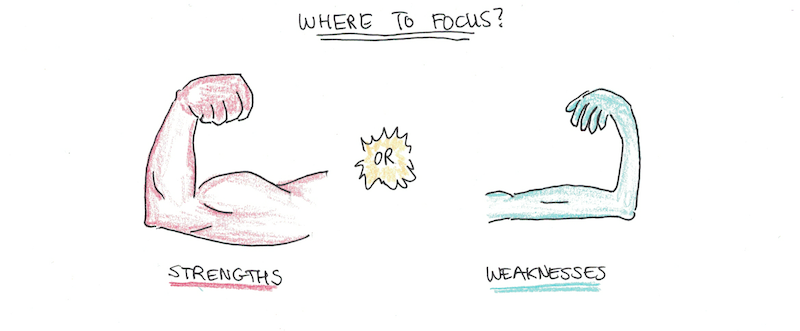
After you fail, you start working on things that you are good at. Because that provides you comfort. Instead, work on things that weren’t good for you. It is very difficult but it is very important. Only that can help you increase your score.
3) Number of Questions: Quality over Quantity

I was occupied with solving as many questions as I can. I thought that would make me the winner. But the truth is, analysis of mistakes you did and learning from them matters more.
It’s better if you solve 10 questions and learn 5 things about you than if you solve 100 questions and learn nothing from it.
4) Get outside perspective from an expert
You cannot be champion on your own. It is very important to share your results, your pattern, your mistakes with an expert and get some advice. I did it very late. Had I done this earlier I may have improved my score in my second attempt itself.
5) Prefer official material
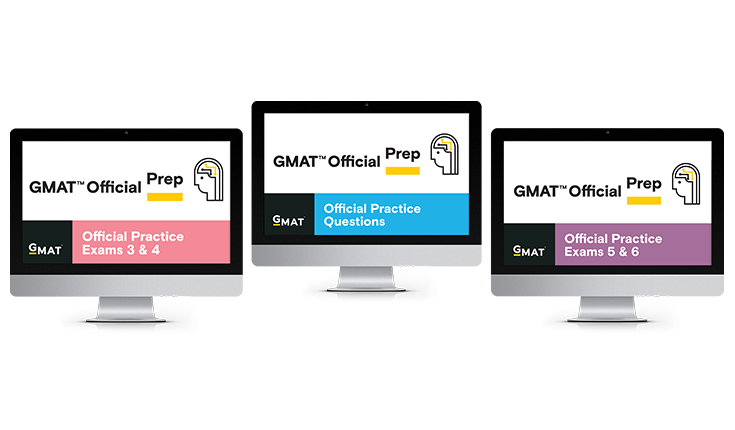
This is my observation. There is a lot of question bank out there offered by lots of prep companies. The guys who have designed those questions are of course experts but I still feel, its the official GMAT questions that would give you a real feel of how GMAT exam looks like.
Try prepping concepts from some test prep company and then prefer solving official retired questions.
6) The most important: Don’t lose hope!

Had I lost hope after the first or second attempt, I won’t be here to write this article. I spent thousands of rupees. I was failing again and again but hope was the only thing that kept me sailing.
Finally, these things look beautiful to read in articles. I had also read similar things in many articles. But applying them in real life is an extremely difficult thing. But it’s only difficult decisions that makes you different from others. Because not everyone can take risks !
Be patient, keep learning from mistakes and keep working hard. The light will shine soon.
Thanks for reading my journey. 🙂


 SHLOKK
Leave a comment